Designer by trade, writer at heart.
I'm a content design lead with 8+ years of experience. I specialize in content strategy, UX writing, and turning messy, undefined problems into systems that scale.*
At Instagram, I worked across multiple product teams to build creation experiences used by billions of people. I defined content systems across end-to-end photo and video sharing. And named everything from photo filters to fonts.
Before that, I was the founding product content strategist at Adjust, a B2B SaaS company, with a desktop UI and plenty of product documentation to use it. I designed a help center, founded a content strategy team from scratch, and created the infrastructure to support content across the entire customer lifecycle.
Get in touch: joli.barretta@gmail.com | Based in Oakland, CA
*A manager once described me as "quite dogged." I took it as a compliment.
Instagram is a social media platform with 3B monthly active users owned by Meta.
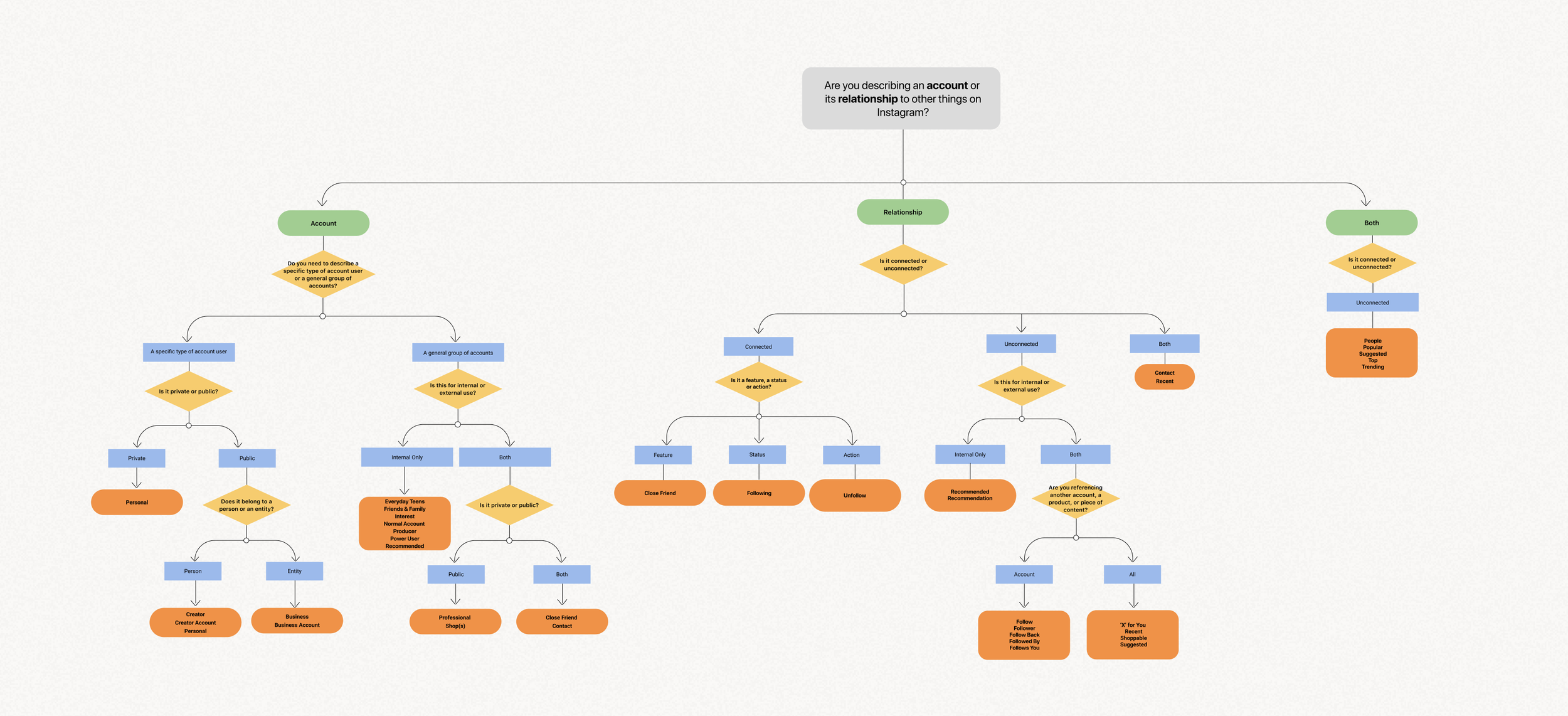
User graph terminology decision tree
Content systems
Building the terminology infrastructure behind Instagram's creation experience
Challenge: At the scale Instagram operates, inconsistent language becomes a product problem. Conflicting terms slow down teams, create confusion in the UI, and compound across every surface they touch. I kept finding this issue in different forms.
What I did:
Built a user graph decision tree with a cross-org team of content designers, synthesizing 6 term spectrums into a single framework so any CD could find the right language for describing accounts and relationships.
Led a Meta-wide Reels glossary update, coordinating 10 content designers and 3 terminology reviewers across the company to evaluate 80 terms and submit 25+ updates.
Ran an IG-wide sharing terminology sprint to create a scalable language system for one of the most frequent actions on the app—defining the scope, garnering leadership buy-in, and publishing a framework that's now used across surfaces.
Published the Camera glossary and co-authored the internal nomenclature for Instagram's unified sharing platform.
Why it mattered: Teams moved faster, content designers stopped re-litigating the same terminology questions, and the language users encountered across Instagram got more consistent because the systems made the right term easy to identify.
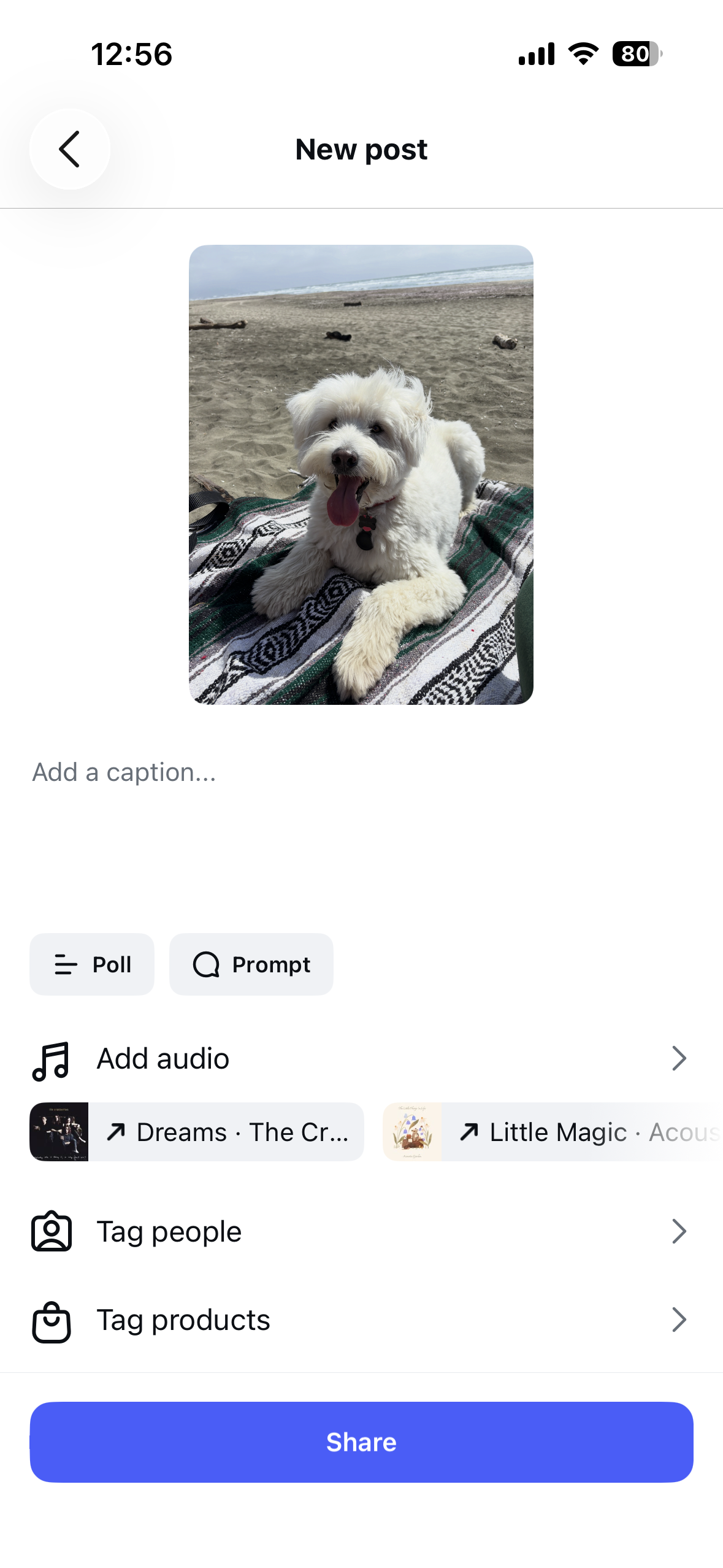
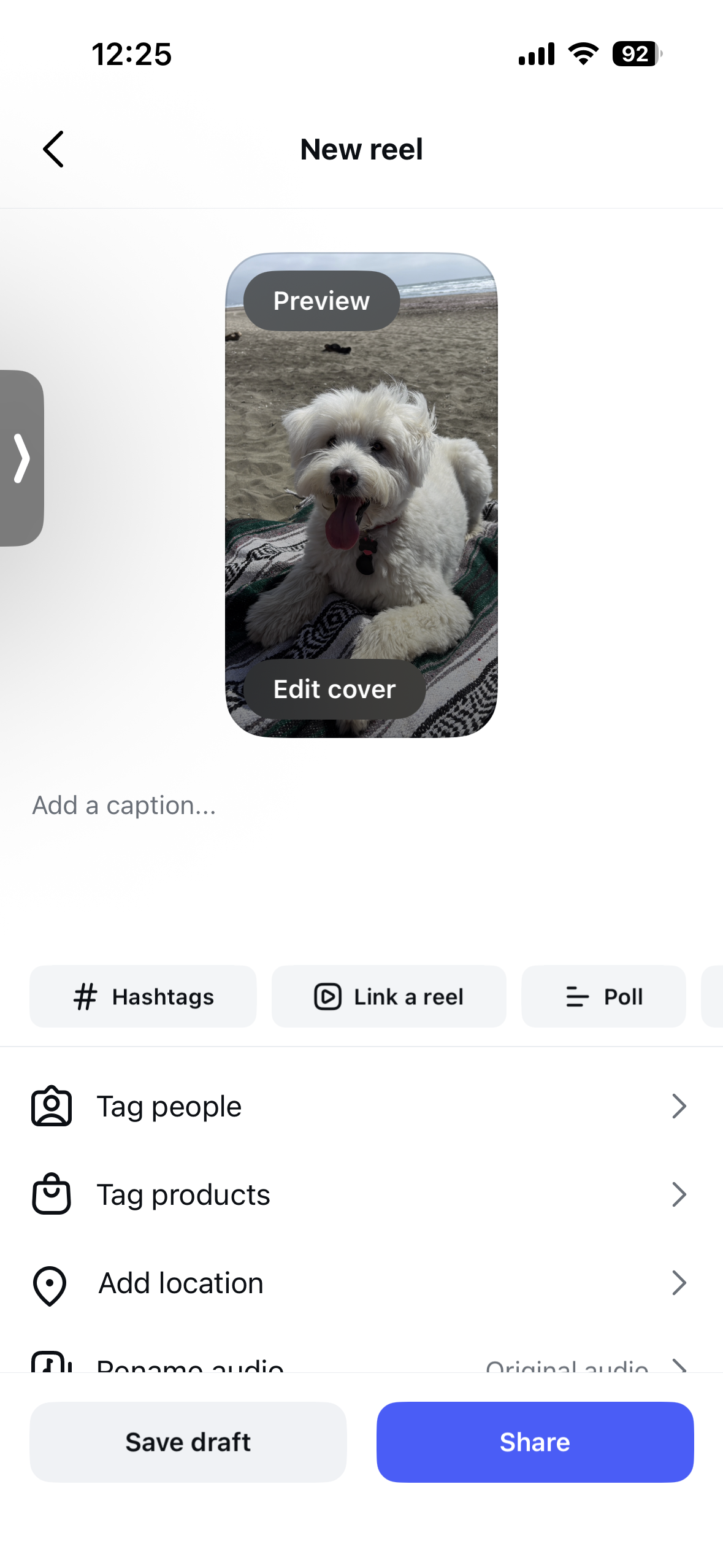
Publish screen simplification
From 65+ actions to a scalable system
Challenge: Instagram's publish screen—the surface every person passes through to share a post or reel—had accumulated 65+ actions with no governing structure. Our data suggested this wasn't just a craft problem: people were having trouble finding useful tools, and that friction was affecting production. I saw an opportunity to simplify one of Instagram's highest-traffic surfaces and for content design to lead the effort.
What I did:
Audited every action across the post and reels publish screens to understand what was there, how it was being used, and where the experience was breaking down.
Designed a scalable information architecture to organize those actions, then drove the cross-functional effort to test and ship it: defining scope, setting milestones, and coordinating across teams without dedicated PM support until one was staffed.
Created a governance model embedded in Instagram's existing review structures, so the screen wouldn't gradually become cluttered again.
Why it mattered: The simplified screen shipped and exceeded the goals we set for it, increasing usage of previously underutilized tools and lifting the production metrics the Creation team cared about most. And we made it a long-term fix by establishing a governing system to maintain the design over time.
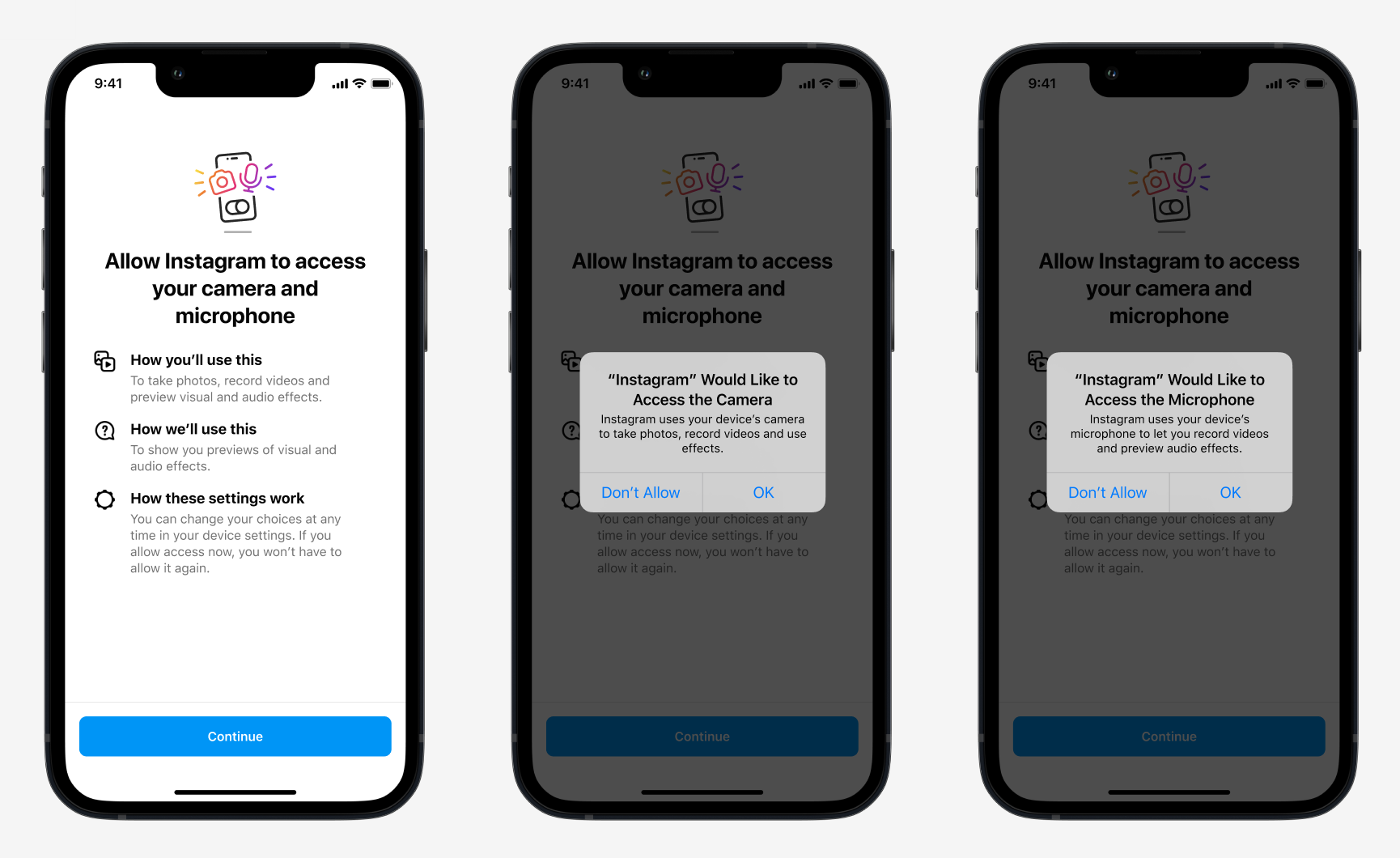
Camera permission flow
UX writing
Copy decisions at billions-of-users scale
Challenge: Instagram's creation experience is where much of the product complexity lives and where the UX writing decisions have the highest stakes. A label on the wrong button, a misleading CTA, or a flow that assumes too much means small copy decisions can have large consequences.
What I did:
Owned the content strategy for the end-to-end reels and post creation flows.
Designed and ran copy experiments across the creation experience, including a CTA change that increased Reels daily active production by 0.5%, and a trim screen recommendation that lifted both producer and first-time producer activity.
Led a series of drafts reliability improvements that reduced the iOS and Android restore failure rate by roughly 65% and cut user-reported drafts issues by over 70%.
Designed user permission flows for iOS and Android that were adopted cross-family into the Threads (original) and Edits apps.
Why it mattered: Creation is the part of Instagram that's hardest to get right because the stakes are high and the margin for confusion is low. Clear, well-tested copy in these moments directly affects whether people actually make and share the content that keeps people coming back to the app.
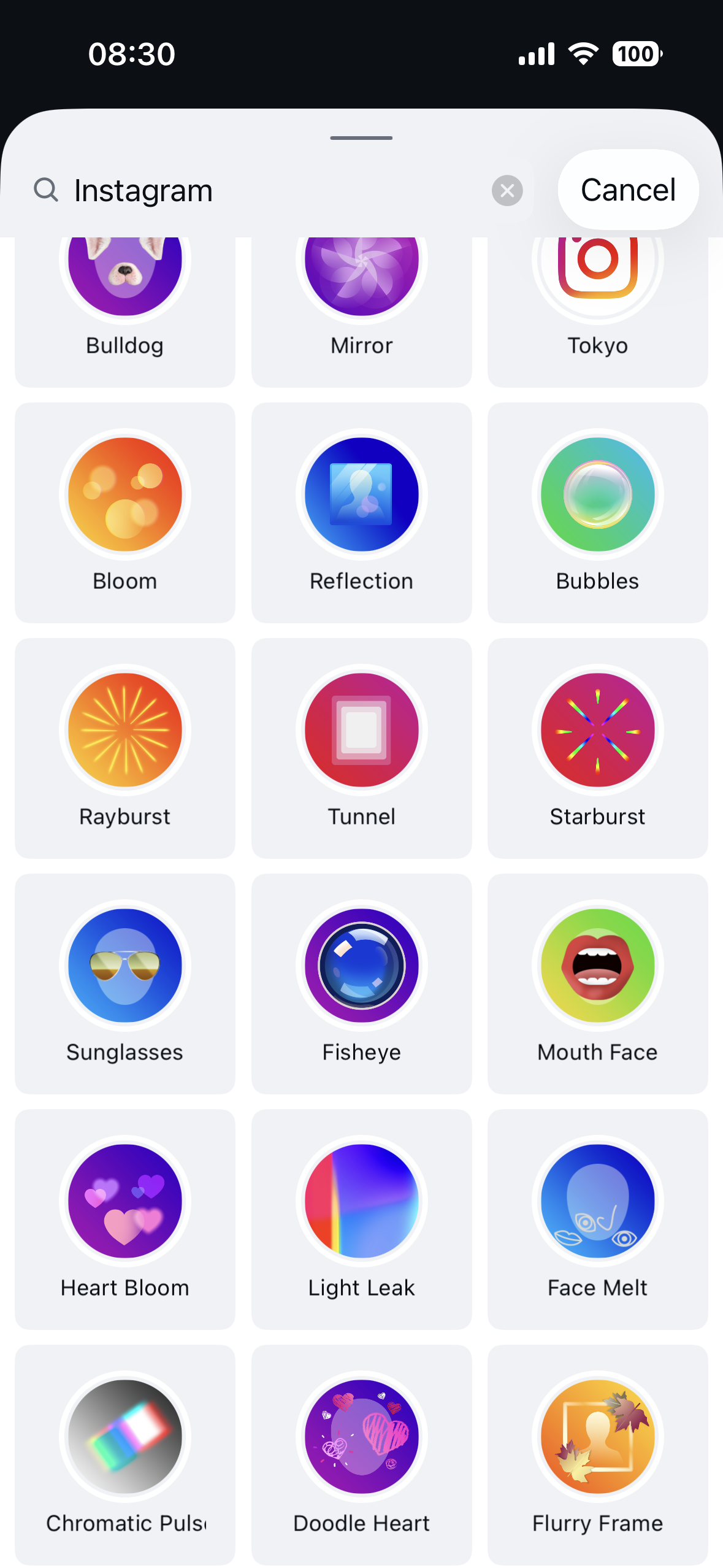
Effects
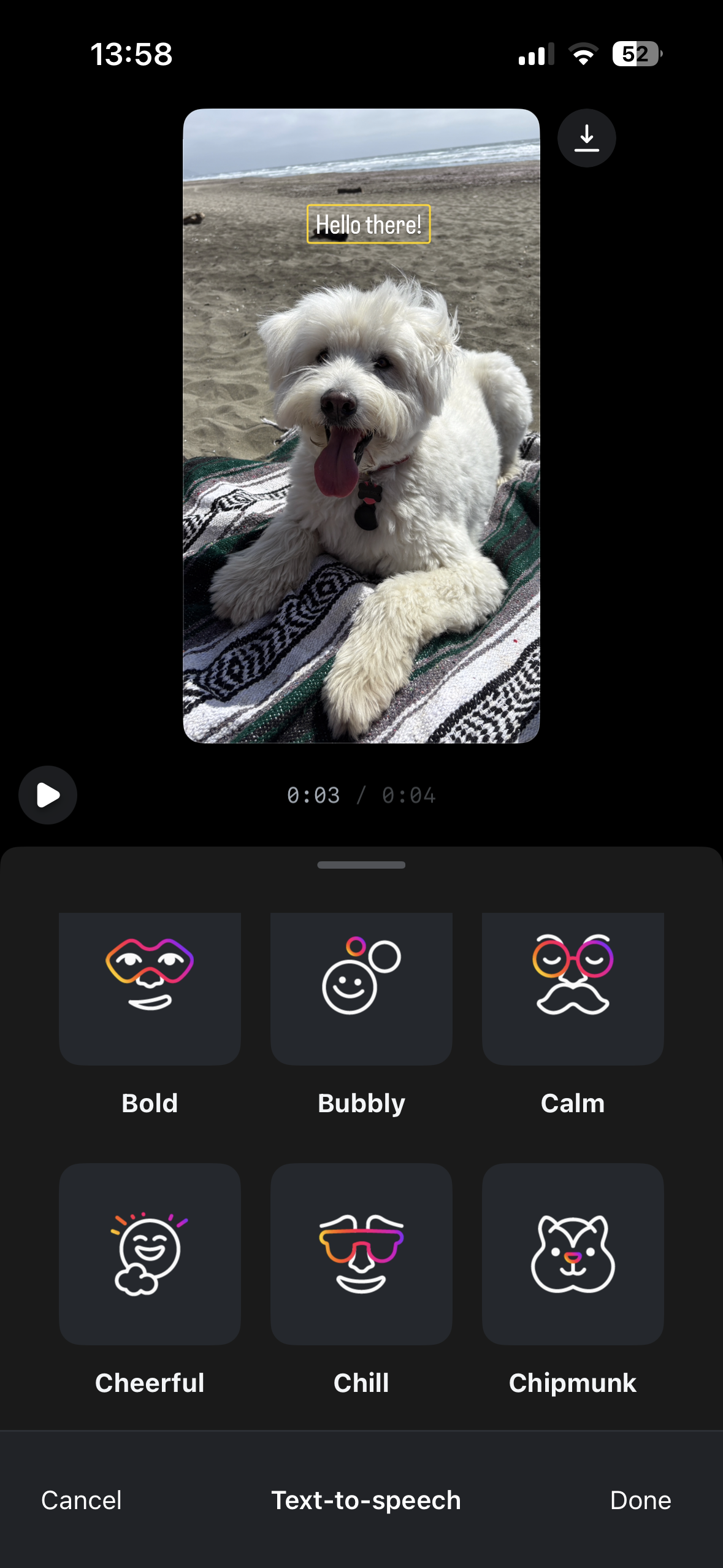
Text-to-speech voices
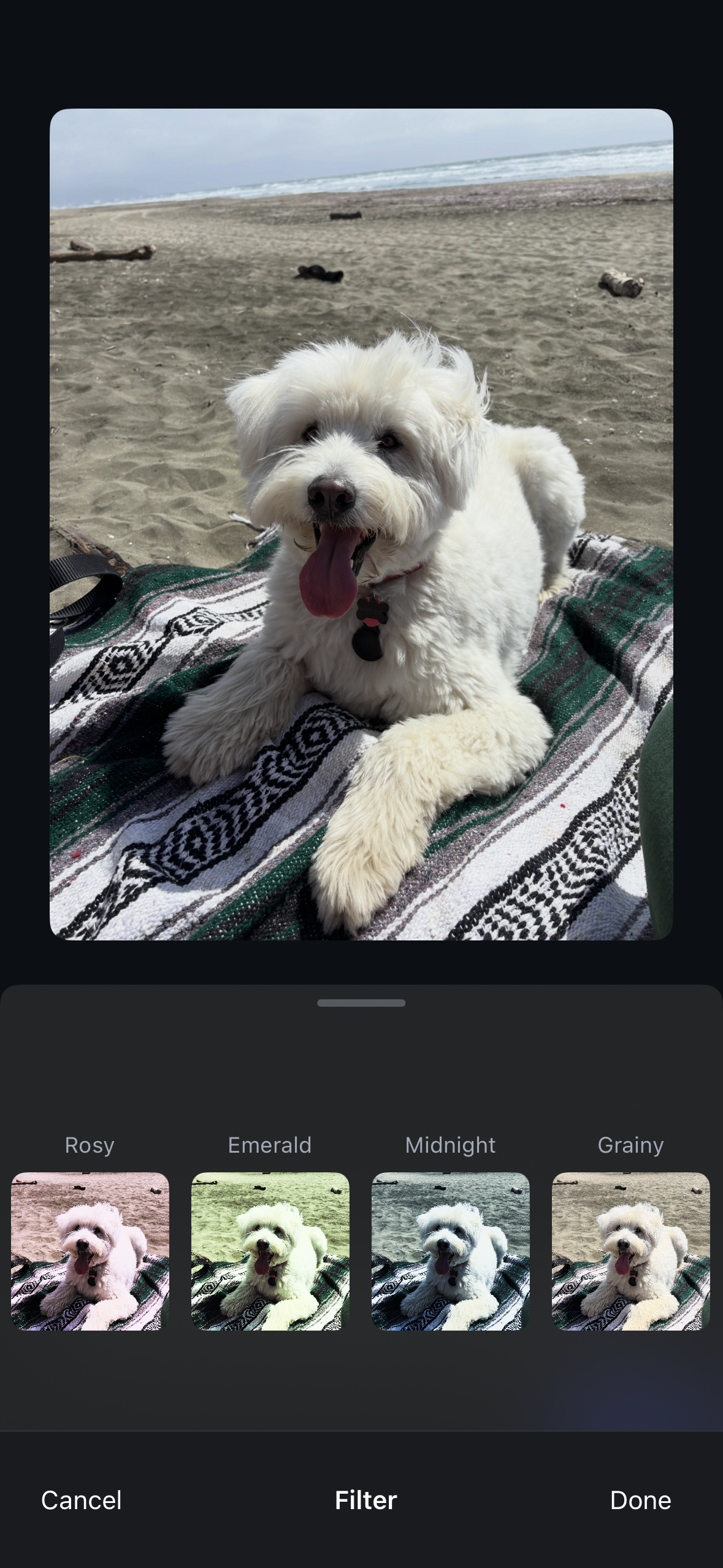
Filters
Product naming
Naming at scale
Challenge: At Instagram, naming isn't just a creative exercise; it has to work in multiple languages, avoid trademark conflicts, scale across a product ecosystem, and make sense to someone encountering it for the first time.
What I did:
Named hundreds of creative assets across Instagram and Edits: video and AR effects, photo filters, text-to-speech voices, sticker packs, sound effects
Developed naming standards for every creative asset IG offered and published Meta-wide AR effect content standards to ensure naming was consistent and scalable across the family of apps.
Ran namestorms, conducted localization checks, and coordinated trademark reviews with legal.
Provided consultations for other naming projects happening across the organization.
Built out a naming workflow from the ground up: engineering an internal CMS to track the full creative asset library—helping deduplicate names and enforce naming conventions—and an automated intake system to manage requests, improve visibility, and reduce turnaround time.
Developed an LLM skill to execute naming at scale, reducing turnaround time by 70%
Why it mattered: Names are often the first thing a user encounters, so getting them right means the product feels intuitive, while getting them wrong could mean user confusion or a costly trademark or localization issue that surfaces after launch.
Adjust
Adjust is a mobile analytics platform that helps growth marketers measure their return on ad spend. It was acquired by Applovin in 2021.
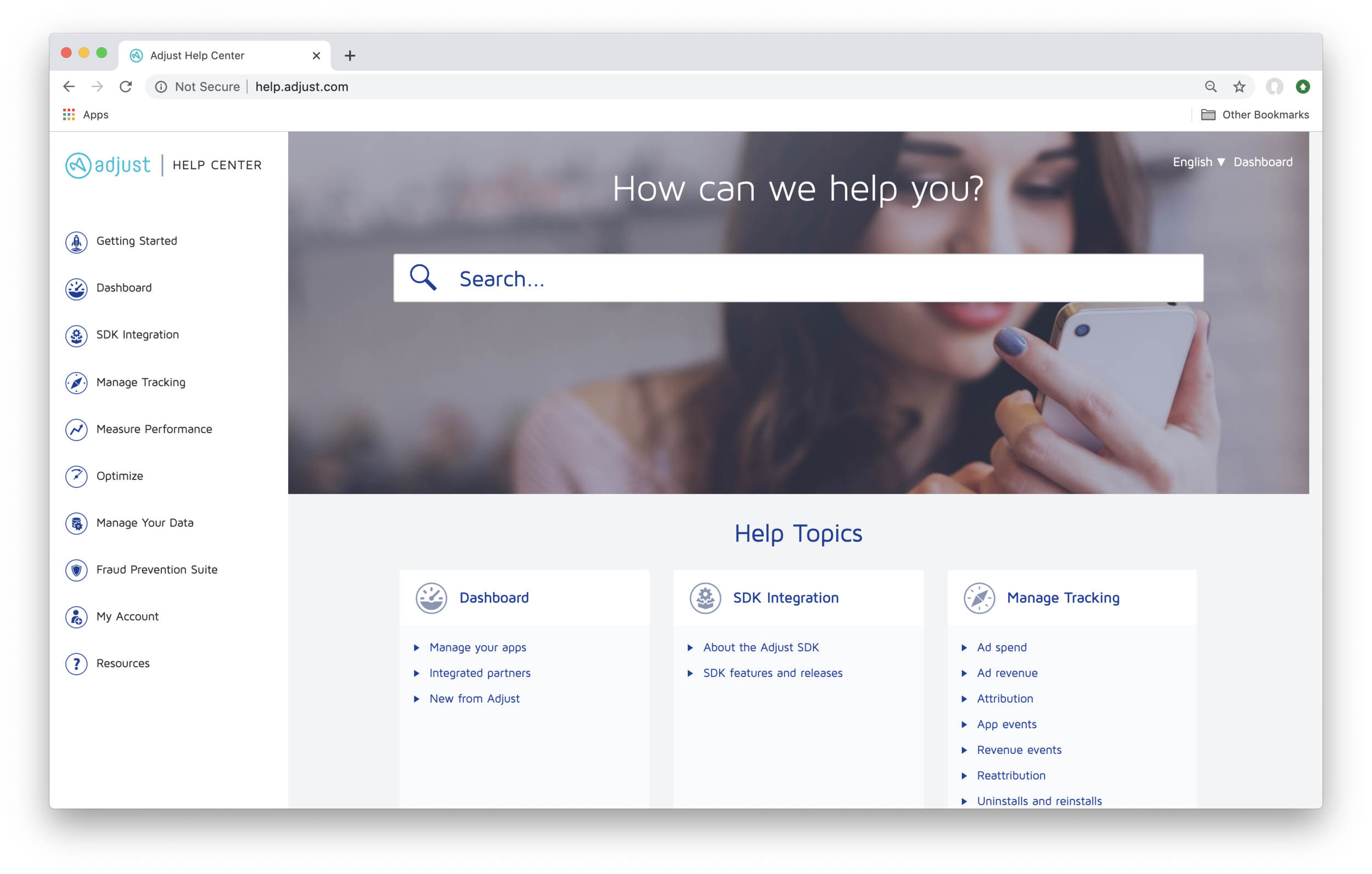
Help Center redesign
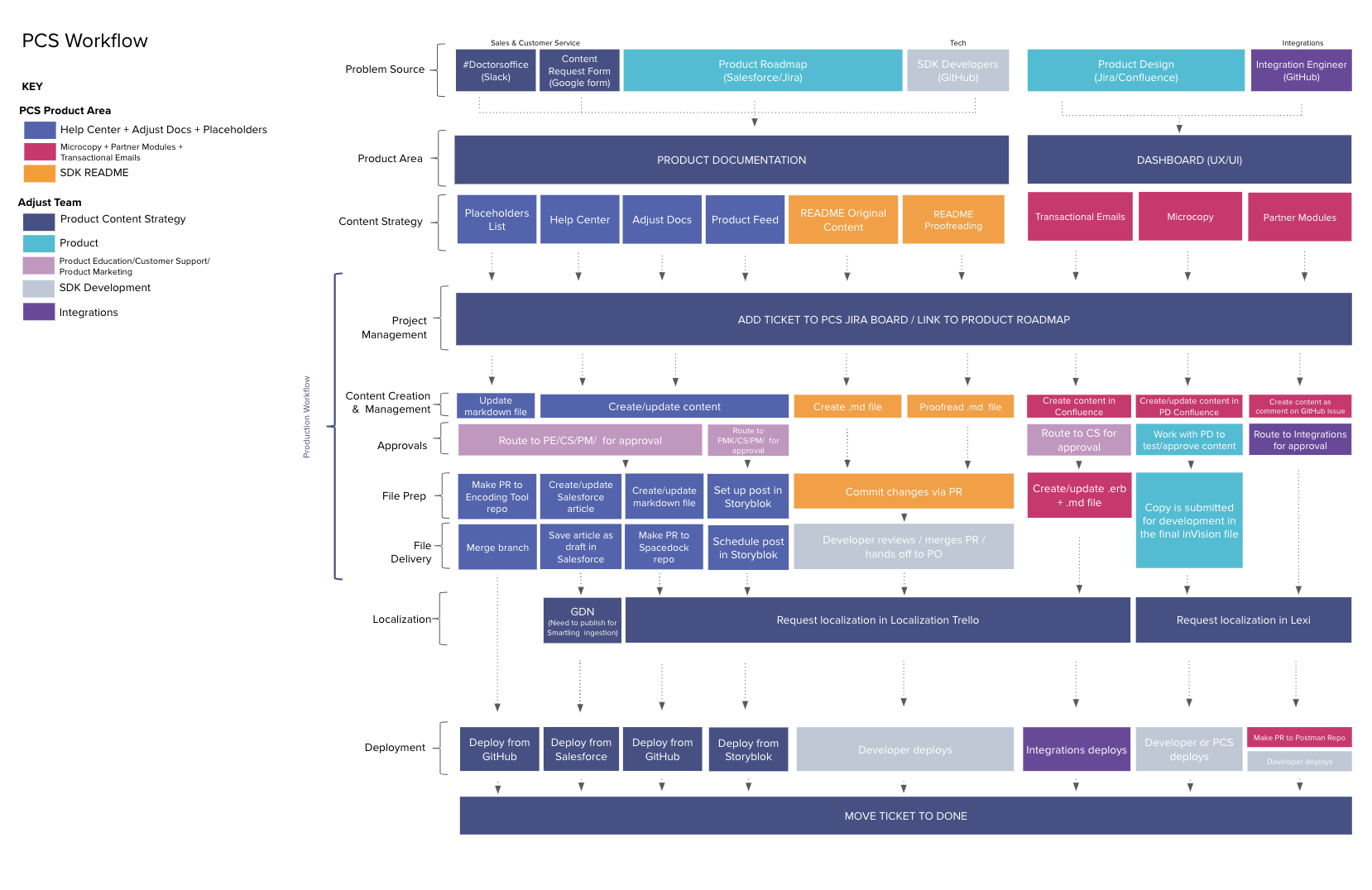
Challenge: As a fast-growing startup, Adjust had outgrown its original approach to product documentation. It needed a content strategy that could scale with product development and the infrastructure to support it.
What I did:
Audited existing documentation, eliminated duplicates, and rewrote 50+ articles using a consistent structure customers could follow and writers could repeat.
Rebranded the destination from "Docs" to "Help Center" to signal that it was designed for customers looking for answers—not just technical documentation.
Migrated the site off GitHub and integrated it with a Salesforce CMS, partnering with Engineering, Design, and Customer Service to build and QA the new experience.
Why it mattered: Customers could find answers without opening a support ticket. Writers had a repeatable format that scaled with the product. Help content had a home: a real content management system instead of a GitHub repo nobody wanted to navigate.
From GitHub repo to self-serve destination
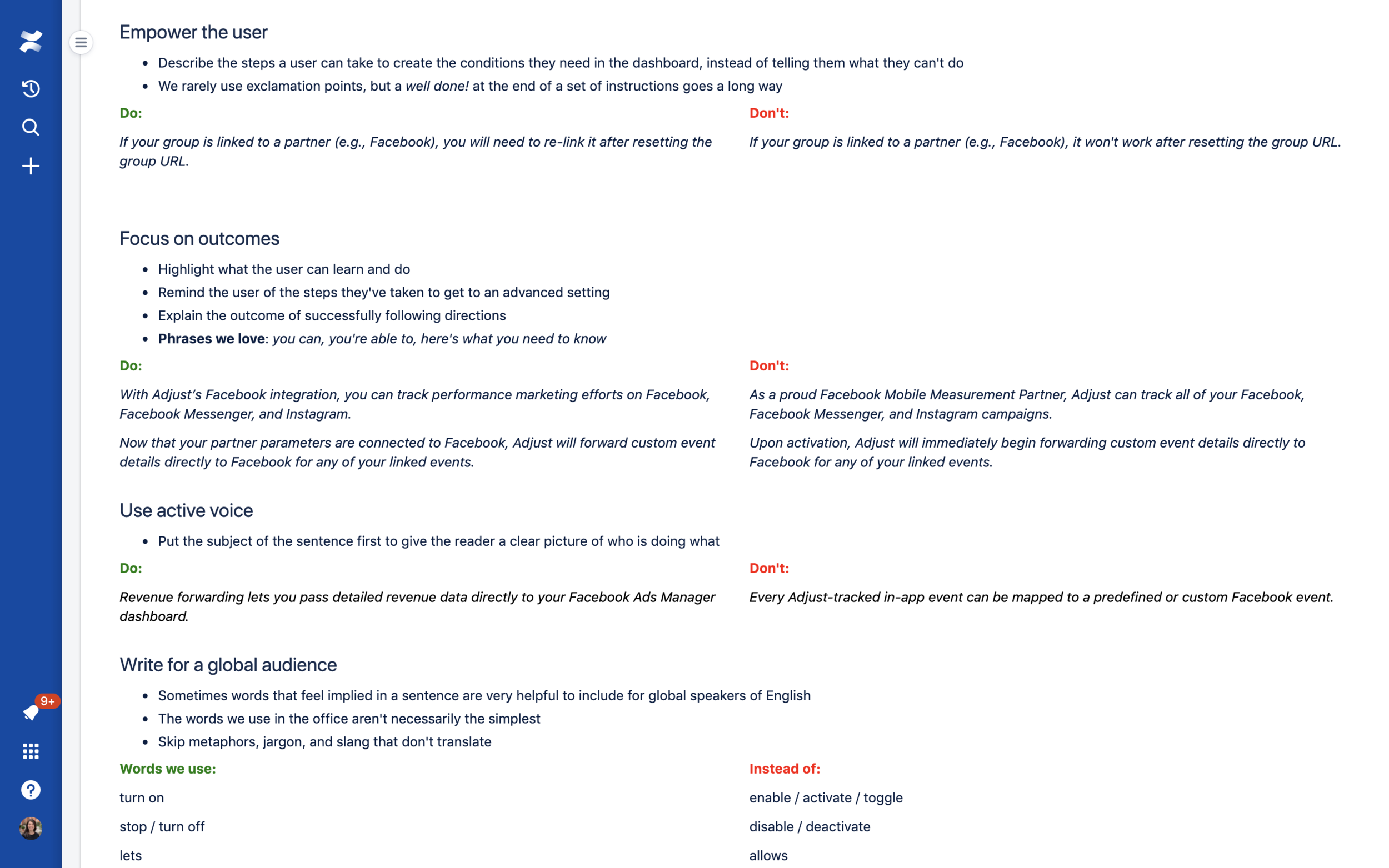
Product voice, tone, and content standards
Giving a growing team one voice
Challenge: Our product needed to sound like one voice: guidelines for how to write, and principles for who Adjust sounds like.
What I did:
Ran design-thinking workshops to surface and align on voice principles.
Built a tone map to guide voice volume decisions across different product moments.
Defined the content standards information architecture, wrote the guidelines, and ran group critiques to build shared ownership across the team.
Why it mattered: Multiple writers could ship content that sounded like the same voice. Onboarding new team members got faster. And the product content had consistency across every surface.
Organization design
Building a UX writing discipline from scratch
Challenge: Adjust didn't have a UX content strategy function. We needed to define who we were, how we worked, and what deliverables we owned.
What I did:
Named the discipline and defined its scope.
Built a career path so writers understood how to grow.
Hired, onboarded, and managed a team of 3 content strategists.
Established cross-functional workflows so the team could operate as a real part of the product development process—not an editorial service that cleaned up copy at the end.
Why it mattered: The team went from zero to a functioning discipline with clear ownership, a defined identity, and writers who knew what growth looked like. Content stopped being an afterthought and started being part of how Adjust shipped features.